


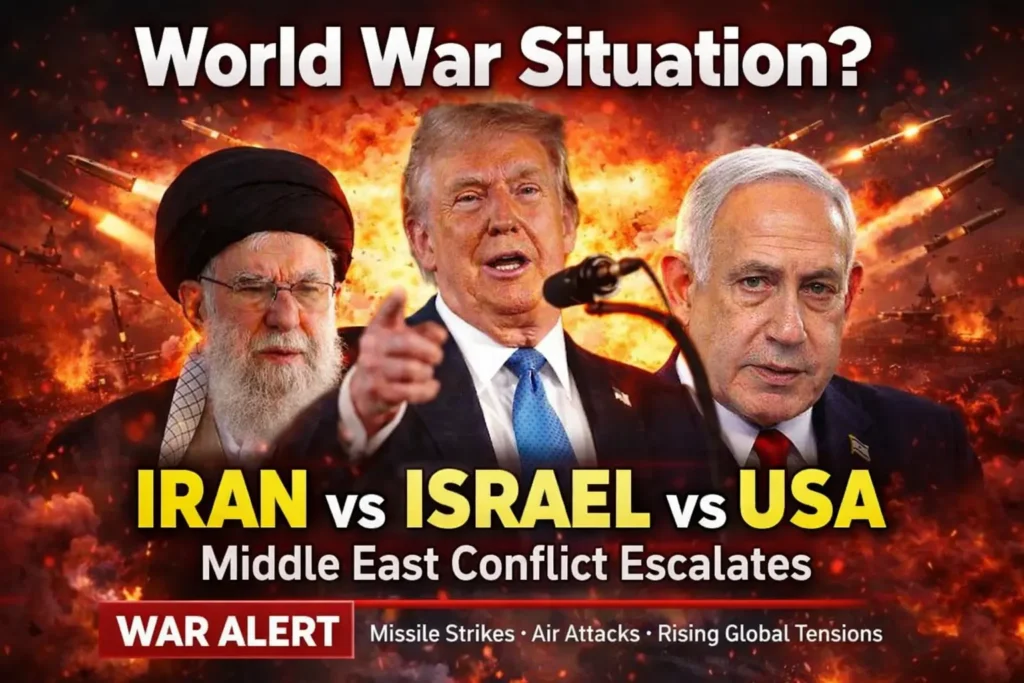
Iran, Israel, and the USA have become a serious topic of discussion these days because the United States and Israel carried out an airstrike on Iran on the night of February 28, which was called Operation Lion’s Roar. The target locations of these attacks were Iran’s nuclear sites, missile bases, and military infrastructure.
This attack caused the biggest loss to Iran with the reported death of Iran’s Supreme Leader, Ali Khamenei. After this, Iran began retaliating by launching hundreds of missiles and drones targeting Israel and US bases. Meanwhile, the US and Israel are continuously carrying out bombings inside Iran. As a result, more than 1,000 people have reportedly died in Iran so far. Large explosions have occurred in several cities, and there are also reports that many children died in a strike on a school.
If we look at the situation, Iran’s Supreme Leader Ali Khamenei was considered a supporter of a strict Islamic ideology, which many Iranian women described as nothing less than a nightmare for them. Iranian women have mentioned this in several interviews because women in Iran reportedly had very limited freedom. Due to this, women in Iran had been protesting for a long time, demanding their freedom. Women said that wearing a hijab was compulsory whenever they went outside their homes, and this rule applied to women of all ages. If someone did not follow it, they could face severe punishment or even threats to their lives.
After the death of Iran’s Supreme Leader Ali Khamenei, there has reportedly been a wave of celebration in some parts of Iran because many women hope they will finally receive the rights they have been waiting for for years. Because of this, some religious hardliners in Iran are mourning, while people who believe in living with humanity are celebrating. Some Iranians say that no religion should be so extreme that it takes away all the freedoms of human life and forces people to live according to harsh rules.
The ongoing conflict involving iran vs israel war United States stems from deep-rooted geopolitical tensions, particularly surrounding Iran’s nuclear ambitions and its role in the Middle East.
For years, Israel and the U.S. have accused Iran of secretly pursuing nuclear weapons while pretending to focus on a nuclear energy program. Iran, on the other hand, insists that its nuclear efforts are solely for peaceful purposes, like generating energy. Nevertheless, Israel views a nuclear-capable Iran as a significant threat to its security.
Another factor fueling the conflict is Iran’s expanding military and political clout in the region. Iran backs various groups and governments that are seen as adversaries by both Israel and the U.S. This support has led to escalating tensions over the decades.
Things took a turn for the worse when the U.S. and Israel executed a joint military operation known as Operation Lion’s Roar, aimed at striking Iran’s nuclear facilities, missile sites, and military infrastructure. The goal of these attacks was to diminish Iran’s military strength and halt its nuclear advancements.
The ongoing conflict involving iran vs israel war could stretch anywhere from a few weeks to several months, depending on how military and diplomatic situations unfold. If both sides keep launching retaliatory strikes, the fighting might escalate and drag on even longer.
On the flip side, international pressure from nations like Russia and China, along with global organizations, could encourage the parties to come to the negotiating table and agree on a ceasefire. Most experts think that major powers will do their best to avoid a drawn-out war, as it could throw the entire Middle East into chaos and have a serious impact on the global economy, particularly concerning oil supplies and international trade.
Will this increase inflation around the world?
Absolutely, this conflict can have a significant impact on inflation, which essentially means rising prices. The key factor here is Iran’s location in the Middle East, a region that plays a crucial role in global oil production. If tensions between Iran, Israel, and the United States escalate or persist, we could see disruptions in the global oil supply.
Why Inflation Might Rise
- Soaring Oil Prices
Any war or instability in the Middle East can lead to a decrease in oil production or disrupt shipping routes, causing international crude oil prices to spike. - Increased Fuel Costs
As crude oil prices climb, the costs of petrol and diesel follow suit, which directly drives up transportation expenses. - Costlier Goods and Services
With transportation costs on the rise, many everyday items, from food and vegetables to electronics and other products, become more expensive. - Global Supply Chain Disruptions
Conflicts can throw a wrench in international trade routes and supply chains, leading to higher prices around the globe.
Impact on India
India relies heavily on oil imports from the Middle East. If this conflict drags on, it could push fuel prices up in India, which would, in turn, raise the costs of many everyday goods.
Conclusion
the conflict between iran vs israel war has created serious global concern. If tensions continue, it could affect oil prices, global stability, and economic conditions. The world now hopes that diplomacy and international pressure will help reduce tensions and prevent a larger war.
1. Why is the conflict happening between Iran, Israel, and the United States?
The conflict is mainly due to tensions over Iran’s nuclear program, regional influence, and long-standing political rivalry with Israel and the United States.
2. Could this conflict turn into World War III?
Most experts believe a world war is unlikely right now, but if more powerful countries become directly involved, the risk of a larger global conflict could increase.
3. How can this conflict affect the global economy?
If tensions continue, it could disrupt oil supply from the Middle East, increasing fuel prices and inflation around the world.
4. What is India’s role in this situation?
India is maintaining a balanced diplomatic position, as it has strong relations with Israel and also important trade and energy ties with Iran.